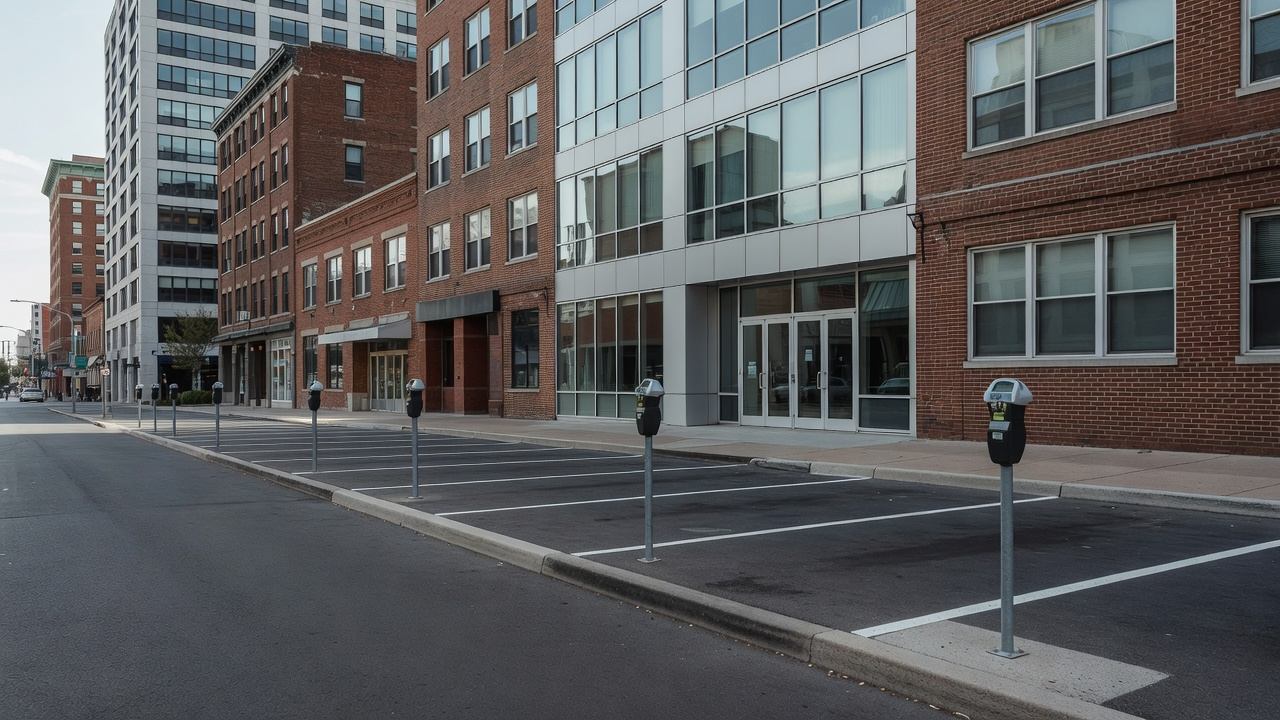
A snow emergency ordinance asks something unusual of a driver: move a parked car on short notice, possibly in the middle of the night, based on a declaration the driver may not have seen. Every part of the policy exists to close that gap, and cities have closed it in very different ways. Comparing how a handful of them write the rule, announce it and enforce it shows where the design choices matter.
How the rules are written
Triggered by snowfall, or by a declaration
Chicago uses a snowfall trigger. Its snow-route restriction covers roughly 500 miles of streets and takes effect when at least two inches of snow have fallen, regardless of date or time, according to the city’s published guidance as reported by NBC Chicago for the 2022–23 season. Other jurisdictions write the trigger as a declared emergency: a public works or police official decides, and the restrictions begin at a stated hour. Municipal codes vary on thresholds; some tie the declaration to two inches of accumulation and others to three.
The distinction matters operationally. A numeric trigger is predictable and easy to defend in court, but it can fire when plows are not ready. A declaration gives the city discretion to time the restriction to its crews, at the cost of needing a reliable way to tell the public.
Standing seasonal bans
Some restrictions do not depend on snow at all. Chicago’s winter overnight ban, per the same report, runs from December 1 to April 1 between 3 a.m. and 7 a.m. on 107 miles of streets with permanent signs, and is enforced whether or not snow is on the ground. Sun Prairie, Wisconsin, according to its ordinance, prohibits parking on snow routes from midnight to 7 a.m. A seasonal ban trades flexibility for clarity: the sign is always accurate, so the city does not have to win a communication contest each storm.
Phased and alternate-side systems
Minneapolis and St. Paul use phases tied to plow routes. In Minneapolis, as the city describes it, parking is prohibited on both sides of snow emergency routes beginning at 9 p.m., then on the even side of other streets beginning at 8 a.m. the next day, and on the odd side beginning at 8 a.m. the following day through 8 p.m. St. Paul divides streets into night plow routes, where parking is barred from 9 p.m., and day plow routes, which are not marked by signs. Omaha uses the odd-even approach: during an emergency, vehicles park on the odd-addressed side on odd calendar dates and the even-addressed side on even dates.
Phased systems clear streets in a sequence, which is efficient for plows, but they put the heaviest burden on the driver, who must know which phase applies to a given block and day.
How cities signal it
Signage is the reliable channel because it reaches people who never open a city notification. Chicago’s seasonal ban relies on permanent signs; St. Paul marks night plow routes with signs and leaves day routes unmarked, so the absence of a sign is itself information.
Alerts do the rest, and cities now stack several channels. Minneapolis directs residents to a text alert program (text MPLSAlerts to 77295), to Smart911 profiles, to a banner on the city website and to an automated hotline at 612-348-SNOW. According to local reporting, the city retired its dedicated snow emergency app and now sends notifications through the Minneapolis parking app. Boston, according to local news coverage, pairs its snow emergency and parking ban declarations with a practical accommodation: discounted garage rates for residents who need somewhere to put a car.
The Boston garage approach addresses a real design flaw. A ban that tells people where they cannot park, without telling them where they can, tends to push cars onto the next block that is also about to be restricted.
Alert channels also fail. One Minneapolis resident reported to local media having signed up for text alerts and not receiving a notice during a recent emergency. A city should assume some share of drivers will be missed, and the rule for what happens to them, covered below, is where fairness is decided.
How cities enforce it
Enforcement follows a common pattern of ticket first, tow when the car blocks plowing. St. Paul enforces for up to 96 hours after an emergency begins at 9 p.m. Its published fees, as listed on the city’s ticketing and towing page, are a $56 parking ticket, a $246 tow and impound charge if claimed before midnight the same day, and $15 per additional day of storage. Chicago’s published penalties for the 2022–23 season were a $60 ticket, a minimum $150 tow fee and $25 per day storage.
Because a tow is a larger penalty than the ticket, cities that tow tend to publish an online lookup so a driver can find the car by plate or VIN. St. Paul and Chicago both do. A clear lookup, an impound lot with reasonable hours and fee schedules that match what the public was told are what keep a necessary tow from becoming a political problem.
Where license plate recognition fits
Public documentation of plate recognition used specifically for snow emergency enforcement is thin, so claims here should be modest. What is documented is the general tool. Milwaukee began using vehicle-mounted LPR on January 1, 2014, with cameras that photograph plates so officers can check whether a car holds an overnight parking pass, as reported by CBS 58, which also noted that the Department of Public Works could not confirm whether the system changed the number of tows or citations.
The reasonable inference is that the tool helps in two ways. First, it speeds the survey of streets where restrictions apply, which matters when several hundred miles must be checked in a short window. Second, a time-stamped plate image with a location is a record of where a car was when the restriction took effect, which is useful when a driver disputes a citation. Both benefits depend on a city’s policy on plate data retention, which varies by state and is increasingly regulated.
Choices for a city rewriting its ordinance
A few design questions recur across the examples:
- Trigger. Numeric thresholds are predictable; declarations are flexible. Pick one and publish how the decision is made.
- Sign what you can. Permanent signs reach people that alerts do not.
- Offer somewhere to go. Garage discounts, lots or alternate-side options reduce the number of cars competing for the same legal spaces.
- Publish the penalty schedule and the lookup before the first storm, not during it.
- Measure outcomes. Count tows and citations per emergency, along with plow delays caused by parked cars, so the next revision rests on data rather than complaints.
A snow emergency rule is judged by how it performs on the worst night of the year. A city that can show drivers where to park, how they will hear about it and what it will cost if they miss the notice has done most of the work before the first flake.