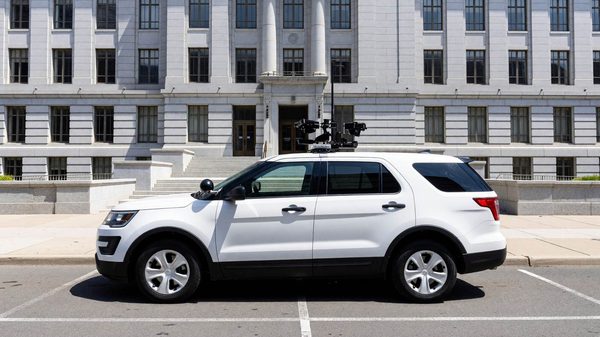
License plate recognition has spent two decades becoming infrastructure. It runs parking enforcement in most major American cities, supports access control at airports and hospitals, and — in its commercial form — tracks vehicle movements for purposes ranging from repossession to insurance rating. For most of that history, the data it produces was detailed, persistent, and largely unregulated at the state level.
That’s changing. A growing number of states have enacted or are actively considering ALPR-specific privacy legislation, and while the details vary significantly by jurisdiction, a recognizable pattern is emerging across the states that have moved first.
The General Shape of Recent ALPR Legislation
State laws in this space vary in their specifics, but several provisions recur often enough to be worth understanding as a category, even before checking any particular state’s exact requirements:
Data retention limits. A number of states have moved to cap how long ALPR data can be retained absent an active investigative hit, with retention windows that vary by state — some considerably shorter than what agencies previously used as an informal default. Retention limits are frequently the most negotiated provision in any given bill, balancing law-enforcement operational needs against privacy advocates’ concerns about long-term tracking.
Permitted-use lists. Many state laws specify the purposes for which ALPR data may be used — commonly including investigating serious crimes, locating stolen vehicles or missing persons, and parking or traffic enforcement — while explicitly excluding other uses.
Prohibited-use restrictions. A recurring theme in newer legislation is an explicit prohibition on using ALPR data for certain sensitive purposes — for example, immigration enforcement or monitoring constitutionally protected activity — reflecting specific policy concerns that have driven legislative interest in a given state.
Private-sector data access controls. Some states have moved to require a warrant or other judicial process before law enforcement can obtain ALPR data held by private commercial operators, closing what privacy advocates have described as a gap that allowed agencies to access aggregated plate data without the oversight that would apply to a police-operated system.
Enforcement mechanisms with real teeth. Some newer laws include a private right of action — meaning an individual whose data was misused can sue for damages — rather than relying solely on regulatory enforcement, which raises the practical stakes for operators who don’t take compliance seriously.
Because the specifics — retention period, exact permitted and prohibited uses, whether a private right of action exists, registration or certification requirements — vary considerably by state and change as legislatures act, operators should treat any specific figure or provision as something to verify against current state statute rather than take as settled nationwide fact. A state’s own attorney general’s office or legislative research service is generally the most reliable primary source for current requirements.
Implications for Parking Enforcement Specifically
Parking enforcement is very commonly listed as a permitted use even in states with otherwise restrictive ALPR frameworks, reflecting a general legislative preference to preserve operationally uncontroversial uses while restricting the applications that generated the privacy concern in the first place. That said, a permitted-use designation doesn’t exempt an operator from the law’s other requirements — retention limits and any registration or documentation obligations typically apply regardless of how the data is ultimately used.
Where a state law includes a registration or certification requirement, that’s often the most operationally significant piece for parking operators specifically: agencies and vendors providing ALPR services may need to affirmatively demonstrate that their data-handling practices — retention schedules, access logging, use restrictions — meet the statute’s standard, and document that compliance with the relevant state authority.
Where a private right of action exists, the practical exposure shifts meaningfully. A vendor contract that doesn’t clearly pass retention and access obligations through to whoever is actually holding the data creates real risk, since a private lawsuit doesn’t require the same resource constraints that limit regulatory enforcement actions.
Why the Trend Is Accelerating Now
Several converging pressures help explain why state legislatures have turned to ALPR-specific rules in a relatively short window, after years in which the technology spread largely without dedicated statutes.
The first is simply scale. ALPR captures that were once occasional and localized have become continuous and networked, with plate reads increasingly pooled into large aggregated databases that can reconstruct a vehicle’s movement history over long periods. The privacy concern that felt abstract when readers were sparse becomes concrete once the data is dense enough to map where a given car — and by extension its owner — has been.
The second is the blurring line between public and private systems. Commercial operators collect enormous volumes of plate data for their own business purposes, and law enforcement’s ability to tap that commercial pool has drawn particular legislative attention, because it can sidestep the oversight that would apply to a government-operated camera network. Much recent legislation is aimed squarely at that access question.
The third is the growing recognition that ALPR data can reveal sensitive patterns — visits to a place of worship, a clinic, a protest, or an attorney’s office — that lawmakers across a range of political perspectives have found reason to restrict. That breadth of concern is part of why the trend has not been confined to states with any single political orientation, and why operators shouldn’t assume the direction of travel is limited to a few jurisdictions.
What Operators Need to Track
For parking professionals and municipal staff using ALPR in their operations, a handful of practical questions are worth revisiting regardless of which state you operate in, given how quickly this area of law is moving:
Retention schedules. Does your vendor’s data retention practice match the most restrictive state you operate in, or does each deployment follow local law independently? Operators active in multiple states increasingly find it simpler to standardize on the shortest retention period across their footprint rather than manage a patchwork.
Access logging. Who within your organization or your vendor’s organization can query plate records, and is that access actually logged? States that have enacted ALPR privacy laws increasingly expect this as baseline practice, and an operator with no access-logging capability has no way to demonstrate compliance if a complaint or lawsuit arises.
Vendor contract language. Where a state law creates a private right of action or registration requirement tied to data held by a vendor, contract terms that pass those obligations through — with audit rights — are increasingly not optional in regulated states.
Prohibited-use technical controls. Where a state law prohibits specific uses (immigration enforcement, monitoring protected activity, and similar categories appear in a number of recent laws), that generally requires an affirmative technical control — configuring systems so data genuinely cannot flow to a prohibited use — rather than a policy statement alone.
The broader direction across the states that have acted so far is consistent even where the specifics differ: shorter retention windows, more explicit permitted and prohibited use lists, and stronger enforcement mechanisms. Parking operators and municipal agencies that build their internal practices around the more restrictive end of that emerging pattern — rather than the minimum required by whichever state they happen to operate in today — are generally better positioned as more states act.
Frequently Asked Questions
Does state ALPR privacy legislation typically restrict parking enforcement uses of LPR data? Parking enforcement is commonly included as a permitted use in state ALPR laws, since legislative interest in this area has generally focused on restricting surveillance-adjacent uses (like immigration enforcement or tracking protected activity) rather than routine operational uses like parking or traffic enforcement.
How long can ALPR data typically be retained under these newer state laws? Retention limits vary considerably by state and are one of the most negotiated provisions in any given bill — there is no single national standard, and operators should confirm the specific retention period in each state where they operate rather than assume a uniform rule.
What is a private right of action, and why does it matter for ALPR compliance? It’s a legal mechanism allowing an individual whose data was misused to sue directly for damages, rather than relying solely on a state agency to bring an enforcement action. Where this exists, it meaningfully raises the practical stakes of non-compliance for both agencies and the vendors that supply their ALPR systems.
Do these state laws apply to privately operated ALPR systems, or only government agencies? It depends on the specific state — many newer laws apply to both public agencies and private operators, particularly around law enforcement’s ability to access privately held data, but coverage and specifics vary and should be confirmed against the applicable state statute.
What’s the most practical step an operator can take given how quickly this area of law is changing? Build internal data-retention and access-logging practices around the more restrictive end of the emerging multi-state pattern, rather than the minimum required in any single current jurisdiction, and review vendor contracts specifically for how they handle retention, access logging, and use-restriction obligations.
Further Reading from Authoritative Sources
- Check your state’s official legislature website or Attorney General’s office for the current text of any ALPR-specific privacy statute in force.
- National Conference of State Legislatures — Privacy Legislation — a tracker of state-level privacy legislation, including ALPR-specific provisions.