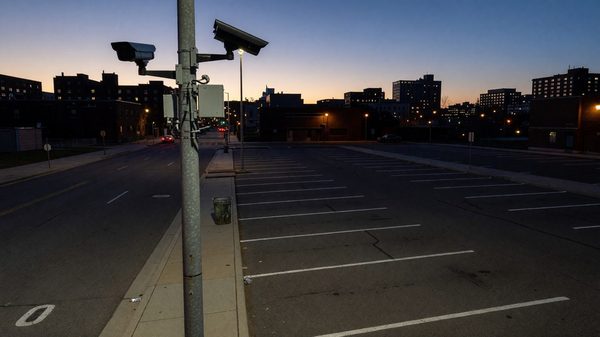
The first hard snow of the season tends to produce the same phone call to parking operations departments across the northern half of the country: the occupancy dashboard says a block is half-empty, a field crew drives past and finds it full, and nobody can say with confidence whether the sensors are lying or the plow just buried one. It’s a minor-sounding discrepancy that gets less minor the more a city has come to rely on that dashboard — for enforcement routing, for dynamic pricing inputs, for the utilization reports that justify next year’s technology budget. A sensor network that quietly loses ten or fifteen points of accuracy every December isn’t broken in any way a vendor’s support line will admit to, but it is meaningfully less useful for exactly the months when curb turnover, loading-zone conflicts, and storm-response logistics matter most.
That gap between advertised accuracy and cold-weather performance isn’t a defect specific to one product line. It’s a predictable seasonal pattern that shows up across magnetometer-based in-ground sensors, camera and radar systems, and the wireless networks that move their data — and it’s one that a growing number of vendors and municipal technology staff have started treating as a planning problem rather than a surprise. With winter now underway across most of the country, this is a reasonable moment for any city running curbside occupancy sensors to walk through where the seasonal failure points actually are, and what a realistic winter-readiness checklist looks like.
Why Winter Exposes Weaknesses That Summer Testing Never Catches
Vendor accuracy specifications are almost always generated under benign conditions — dry pavement, moderate temperatures, clear sightlines. That’s not necessarily dishonest; it’s simply the environment where a controlled test is easiest to run and easiest to defend. The problem is that the conditions vendors test under and the conditions a curb actually experiences for a third of the year in much of the Midwest, Northeast, and Mountain West diverge sharply, and the components most exposed to that divergence — battery chemistry, magnetic-field sensing, optical clarity, wireless signal propagation — all degrade for different physical reasons.
That matters because winter isn’t a single failure mode. It’s several independent stressors arriving at once: sustained sub-freezing temperatures that sap battery capacity, physical snow and ice accumulation that blocks or muffles a sensor’s detection mechanism, road salt and plow contact that accelerate hardware wear, and reduced daylight and low-contrast conditions that specifically hurt camera-based systems. A city evaluating whether its network is “winter ready” needs to check all four, because a sensor that handles one just fine can still fail on another.
How Cold Actually Degrades a Magnetometer Sensor’s Battery
Most in-ground magnetometer pucks run on primary lithium batteries designed for multi-year service without a wired power connection — that’s the entire value proposition of wireless in-ground sensing over cut-in loop detectors. Lithium chemistry is genuinely good in cold weather relative to other battery types, which is why it’s the default choice for outdoor IoT hardware in the first place. But “good relative to alternatives” isn’t the same as “unaffected.” Independent battery testing has consistently found that discharge capacity for common lithium primary and lithium-ion cells declines as temperature drops, with the effect becoming pronounced below roughly 20 degrees Fahrenheit and severe in the sustained sub-zero ranges parts of the northern Plains and Rockies see for days at a stretch each winter. Reported capacity losses in cold-chamber testing vary by chemistry and discharge rate, but double-digit percentage reductions at single-digit Fahrenheit temperatures, worsening further as temperatures keep falling, are a consistent theme across the published testing 111 Park reviewed.
For a sensor rated for a five- or seven-year service life under nameplate conditions, a winter-heavy climate effectively front-loads battery drain into the coldest months of each year it’s deployed. Most vendors’ published specifications already account for this in their overall service-life estimates for cold-climate customers, but it’s worth municipal buyers asking directly rather than assuming: a battery-life figure quoted for a temperate pilot city doesn’t necessarily transfer to a deployment in International Falls or Burlington. Reputable magnetometer vendors typically publish an operating temperature range extending to roughly -40 degrees Fahrenheit or Celsius at the low end, which speaks to the hardware surviving the cold — a separate question from how many detection cycles the battery can support before needing replacement in that same cold.
What Happens When Snow Physically Covers or Surrounds a Sensor?
Magnetometer pucks detect the disturbance a vehicle’s mass creates in the local magnetic field, which means, in principle, a few inches of snow sitting on top of the sensor housing shouldn’t meaningfully change what it senses — snow isn’t ferrous and doesn’t block a magnetic field the way it would block a camera’s optical path. That’s the underlying reason magnetometer and radar-based in-ground sensors are generally considered more weather-resilient than surface-mounted cameras. The practical risk for in-ground hardware in winter is less about snow interfering with detection and more about physical damage: plow blades, especially on aggressive municipal routes clearing curb-to-curb after a heavy storm, can catch a sensor housing that sits above the pavement surface or that has heaved slightly due to freeze-thaw cycling in the substrate beneath it.
That’s why installation depth and mounting method are a bigger winter-reliability variable than most procurement conversations give them credit for. Sensors installed flush with, or slightly recessed below, the finished pavement grade are meaningfully more plow-resistant than surface-bonded units, and several vendors now explicitly market “plow-resistant” or “flush-mount” housings as a distinct product tier for cold-climate customers, with acceptance testing that includes simulated plow-blade contact. A city that installed its network using a contractor unfamiliar with local snow-removal equipment and routes is more exposed here than one that specified installation depth against its own public works department’s plow specifications from the start. It’s a detail easy to miss during a summer or fall installation window and expensive to fix once a block’s sensors start disappearing one storm at a time.
Do Camera-Based Systems Fail for Different Reasons in Winter?
Camera and radar-based curbside monitoring systems face a different set of winter problems, and in most cases a harder one to engineer around, because they depend on a clear optical or radio line of sight rather than a buried field measurement. Snow accumulation directly on a camera lens or housing is the most obvious issue, and it’s exactly the kind of failure that tends to go unnoticed until someone pulls the footage after a storm and finds a whited-out frame. Beyond direct accumulation, low winter sun angles create glare and reflection problems off wet or icy pavement that can be worse than the sun-reflection issues flagged in earlier curbside camera testing during other seasons — 111 Park has previously covered a multi-vendor Bellevue pilot that found camera-based systems fell well short of target accuracy even without winter conditions as a factor, and cold-season lighting adds another layer on top of problems those systems already had.
Reduced contrast during overcast winter days, shorter daylight hours shifting more detection windows into low-light conditions, and windshield or headlight glare bouncing off snowbanks all compound the underlying computer-vision challenge of distinguishing a parked vehicle from its surroundings. Some vendors have responded with heated camera enclosures that prevent ice and snow buildup directly on the lens, and with image-processing techniques intended to reduce visual noise from falling snow or road spray before a detection model runs against the frame. Those are real mitigations, but they’re also added cost and added points of mechanical failure — a heater draws power a battery-only unit wouldn’t need, and a heated housing is one more component that can fail in exactly the conditions it exists to handle.
Is Sensor Fusion the Practical Answer for Four-Season Climates?
Given that magnetometer sensing and optical sensing fail for largely unrelated reasons in winter, a combined approach has genuine appeal for cities in climates that see real snow and sustained cold. Pairing a magnetometer with a radar element in the same in-ground unit — a combination several manufacturers now offer as standard rather than as an add-on — lets the radar cross-check detections the magnetometer flags as ambiguous, and vice versa, without either sensing method depending on a clear optical path a storm can obscure. Radar sensing with an appropriately tuned frequency can also be engineered to see through a thin layer of snow cover rather than mistaking it for an obstruction, which is a specific advantage over camera systems that can’t distinguish a snow-dusted empty space from a snow-dusted occupied one without additional processing.
This isn’t a claim that fusion sensors are immune to winter conditions — they still run on batteries subject to the same cold-weather discharge curve, and they still sit in pavement subject to the same plow and frost-heave risks as a single-mode magnetometer. But for a city weighing sensor technology specifically for a climate with a real winter, treating “how does this perform when it’s snowing and 10 degrees” as a first-order procurement question, not a follow-up one, is a defensible lesson from how these systems actually behave once deployed.
Building a Winter-Readiness Checklist Before the Next Storm
For an operations team managing an existing sensor network rather than specifying a new one, the useful move this time of year is less about technology selection and more about verification. A few checks are worth running before the season’s heaviest storms arrive, and repeating after each major one: confirm reported battery voltage against baseline for a sample of units in the coldest-exposed locations, since a voltage drop steeper than the rest of the network flags cells already struggling; physically inspect a sample of in-ground housings along the routes plowed most aggressively for cracking, heaving, or housing separation from the pavement; cross-check camera-reported occupancy against a manual spot count on at least one heavy-snow day, since that’s precisely the condition vendor accuracy specs are least likely to reflect; and review whether any units have gone silent in the network dashboard, since a dead unit reporting nothing is a more common winter failure mode than a live unit reporting bad data. None of that requires new capital spending — it’s inspection and validation using data the network is already producing, applied on a seasonal schedule rather than only after a citizen complaint surfaces a problem.
Cities that received federal technology funding for curbside sensor upgrades over the past year or so — a pool of eligible projects that expanded when parking and curbside technology was added to the criteria for the U.S. Department of Transportation’s discretionary infrastructure technology grants — have an additional reason to build winter performance into ongoing evaluation, since federally funded pilots typically carry reporting obligations that a quiet seasonal accuracy dip can complicate. The broader point holds regardless of funding source: a sensor network’s real accuracy is whatever it delivers across a full year of conditions, not whatever figure cleared procurement during a fair-weather pilot.
Winter doesn’t have to be treated as an annual asterisk on curbside data quality. It has to be treated as a known, physically explainable set of stressors that a maintenance and monitoring plan can be built around — largely the same discipline highway agencies have long applied to winter-sensitive infrastructure. The Federal Highway Administration’s Road Weather Management Program has spent years documenting how connected roadway technology performs and degrades under winter conditions in a highway context; curbside parking technology is a newer field working through many of the same reliability lessons on a smaller, slower-moving piece of the public right-of-way.
Frequently Asked Questions
Do magnetometer parking sensors work reliably in snow and ice?
Generally yes, because magnetic-field detection isn’t blocked by snow sitting on top of a sensor the way an optical system would be. The bigger winter risks for magnetometer sensors are battery capacity loss in sustained cold and physical damage from snowplow blades catching housings that aren’t flush-mounted, not the snow itself interfering with detection.
Why do camera-based parking sensors get less accurate in winter?
Snow accumulation on lenses, low winter sun angles causing glare, reduced daylight hours pushing more detection into low-light conditions, and lower contrast on overcast days all degrade the image quality computer-vision detection models depend on. These issues compound accuracy challenges camera systems already face from obstruction and weather in other seasons.
How much battery life do in-ground sensors lose in cold climates?
It varies by battery chemistry and how cold the deployment climate runs, but published cold-chamber testing on lithium cells commonly used in wireless sensors shows meaningful capacity reduction below roughly 20 degrees Fahrenheit, worsening further in sustained sub-zero conditions. Cities in snow-heavy climates should ask vendors for service-life figures specific to cold-climate deployments, not fair-weather pilot data.
What’s the single most cost-effective winter-readiness step for an existing sensor network?
Spot-checking reported occupancy against a manual count on at least one heavy-snow day, combined with a physical inspection of a sample of in-ground housings along the most aggressively plowed routes. Both use resources most operations teams already have and catch the two most common winter failure modes — data drift and physical housing damage — before they show up as a public complaint.